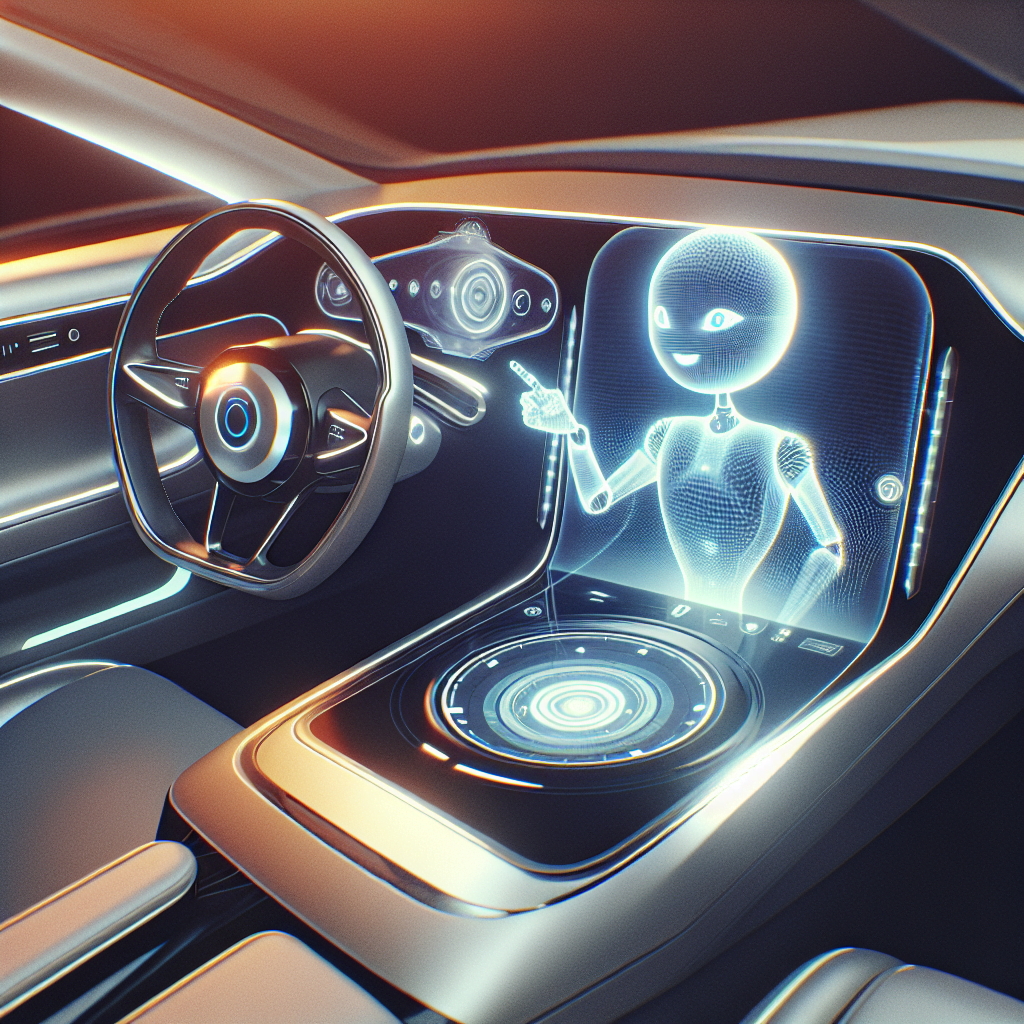
Picture stepping into your vehicle and having it instantly recognize your voice, adjust every setting to your preferences, and anticipate your daily route before you even speak. In 2025, AI voice bots have evolved far beyond simple command recognition to become sophisticated digital companions that understand context, emotion, and individual driving patterns. These intelligent automotive assistants are now integral to the modern driving experience, seamlessly blending safety, convenience, and personalization.
The automotive voice AI market has experienced remarkable growth, reaching $4.2 billion in 2025 with projections indicating a compound annual growth rate of 32.8% through 2030. Today’s voice bots integrate advanced natural language processing, real-time learning capabilities, and multimodal interaction features that respond to both voice and gesture commands. This comprehensive guide explores how AI voice bots are reshaping automotive experiences, current implementation strategies, and emerging trends that will define the future of connected vehicles.

Advanced Voice Bot Technologies in 2025 Automotive
The automotive industry has witnessed unprecedented advancement in voice bot capabilities throughout 2025. Modern systems now incorporate contextual understanding and predictive analytics that extend far beyond basic command execution.
Next-Generation AI Processing
Current automotive voice bots utilize advanced transformer architectures similar to GPT-4 and Claude-3, enabling them to process complex, multi-layered conversations. These systems can understand implied requests, maintain conversation context across multiple interactions, and even detect emotional states through vocal analysis.
Edge computing integration has reduced response times to under 200 milliseconds, while improved natural language understanding supports over 40 languages with regional dialect recognition. The latest voice bots can differentiate between driver and passenger requests, automatically switching contexts based on seat position and voice patterns.
Multimodal Interaction Capabilities
2025 has brought significant improvements in multimodal interaction where voice commands work seamlessly with gesture recognition, eye tracking, and haptic feedback. Drivers can initiate voice commands through steering wheel touches, confirm selections with head nods, and receive tactile confirmation through seat vibrations.
Integration with augmented reality displays allows voice bots to provide visual confirmation of spoken commands, creating a more intuitive and safer interaction model. These systems can project navigation arrows onto windshields while simultaneously providing voice guidance, creating a truly immersive driving experience.
Current Market Implementation and Industry Leaders
The automotive voice bot landscape in 2025 shows remarkable diversity in implementation approaches, with traditional automakers and tech companies pursuing different strategies for market dominance.
Premium Automotive Brands
BMW’s latest “Intelligent Personal Assistant 3.0” now features emotional intelligence capabilities, adjusting responses based on driver stress levels detected through voice analysis and biometric sensors. The system can proactively suggest route changes during high-stress periods and automatically activate wellness features.
Mercedes-Benz introduced their “MBUX Hyperscreen” voice system, which uses machine learning to predict user needs based on time of day, location, and historical patterns. This system can automatically adjust climate settings, suggest playlist changes, and even remind drivers of upcoming appointments without explicit commands.
Porsche’s “Communication Management 7.0” integrates voice commands with their advanced driver assistance systems, allowing drivers to verbally customize driving modes, suspension settings, and performance parameters while maintaining focus on the road.
Electric Vehicle Innovation
Tesla’s “Full Self-Driving Voice” system represents a significant leap in automotive AI integration. The 2025 update allows drivers to engage in natural conversations about route planning, charging station selection, and vehicle diagnostics. The system can explain its decision-making process in real-time, building trust through transparency.
Rivian and Lucid Motors have developed voice bots specifically optimized for electric vehicle management, providing detailed battery optimization suggestions, charging network integration, and energy-efficient route planning through natural conversation interfaces.

Enhanced Safety and Accessibility Features
Safety remains the primary driver for voice bot adoption in automotive applications. 2025 implementations have introduced proactive safety monitoring and emergency response capabilities that extend beyond traditional hands-free operation.
Predictive Safety Systems
Modern voice bots can detect driver fatigue through speech pattern analysis, automatically suggesting rest stops or activating alert systems when drowsiness is detected. Advanced systems monitor conversation flow, response times, and vocal stress indicators to assess driver readiness.
Emergency response integration allows voice bots to automatically contact emergency services during accidents, providing GPS coordinates, vehicle identification, and passenger information. These systems can maintain communication even when drivers are incapacitated, serving as crucial safety lifelines.
Accessibility and Inclusion
2025 has brought significant improvements in accessibility features for drivers with disabilities. Voice bots now support custom command creation, alternative input methods, and adaptive interfaces that accommodate various physical limitations.
Visual impairment support includes detailed audio descriptions of vehicle status, surroundings, and navigation information. Hearing impairment accommodations feature vibrotactile feedback, visual command confirmation, and integration with hearing aid technologies.
Common Challenges in Automotive Voice AI Implementation
Despite remarkable technological advances, the automotive industry faces several significant obstacles in implementing comprehensive voice AI solutions. These challenges span technical, regulatory, and user adoption barriers that require sophisticated solutions.
Technical Integration Complexities
Modern vehicles contain dozens of electronic control units (ECUs) that must communicate seamlessly with voice AI systems. Integration challenges arise when legacy automotive architectures encounter advanced AI requirements for real-time processing and low-latency response.
Automotive manufacturers struggle with balancing processing power requirements against vehicle weight, power consumption, and cost constraints. Advanced voice AI systems require significant computational resources, often conflicting with fuel efficiency and battery optimization goals in electric vehicles.
Network connectivity presents ongoing challenges, particularly in rural areas where cellular coverage remains inconsistent. Voice bots require reliable internet connections for cloud-based processing, creating performance gaps in remote locations where drivers most need assistance.
Privacy and Data Security Concerns
Consumer privacy concerns have intensified as voice bots collect increasingly detailed personal data including conversation history, location patterns, and behavioral preferences. Data protection regulations vary significantly across international markets, creating compliance complexities for global automotive manufacturers.
Cybersecurity threats targeting voice AI systems have evolved rapidly, with hackers developing sophisticated methods to exploit voice recognition vulnerabilities. Manufacturers must implement robust security measures while maintaining system responsiveness and user experience quality.

User Adoption and Training Barriers
Despite technological sophistication, many drivers remain hesitant to fully embrace voice AI capabilities. Generational differences in technology adoption create varied user experiences, with older drivers often preferring traditional manual controls.
Accent recognition limitations continue to affect system accuracy, particularly for users with non-native language patterns or regional dialects. These limitations can lead to frustrating user experiences and reduced system adoption rates.
Complex feature sets overwhelm many users who struggle to understand available voice commands and capabilities. Without proper training and intuitive interfaces, advanced voice bot features remain underutilized despite their potential benefits.
How Toronto Digital Agency Addresses These Challenges
Toronto Digital Agency has emerged as a leading provider of automotive voice AI solutions, specializing in overcoming implementation challenges through innovative approaches and cutting-edge technology integration. Our expertise serves automotive manufacturers, dealerships, and technology companies across Canada, the United States, and internationally.
Advanced Integration Solutions
Our team develops custom integration frameworks that bridge legacy automotive systems with modern voice AI capabilities. We utilize advanced APIs and middleware solutions that enable seamless communication between existing vehicle electronics and new AI systems without requiring complete infrastructure overhauls.
Toronto Digital Agency’s proprietary edge computing solutions reduce latency to under 150 milliseconds while maintaining full functionality in low-connectivity environments. Our hybrid cloud-edge architecture ensures consistent performance regardless of network conditions, addressing one of the industry’s most persistent challenges.
We implement modular AI architectures that allow automotive manufacturers to deploy voice bot features incrementally, reducing implementation costs and technical risks. This approach enables manufacturers to validate user acceptance and system performance before full-scale deployment.
Comprehensive Security and Privacy Solutions
Our cybersecurity team specializes in automotive-grade security implementations that protect voice AI systems from emerging threats while maintaining regulatory compliance across multiple jurisdictions. We employ zero-trust security models with end-to-end encryption for all voice data transmission and storage.
Toronto Digital Agency implements privacy-by-design principles that give users granular control over data collection and usage. Our systems include automated data anonymization, local processing options, and transparent privacy controls that build user trust while meeting regulatory requirements.
We provide ongoing security monitoring and threat assessment services that adapt to evolving cybersecurity landscapes. Our 24/7 security operations center monitors automotive voice AI systems for anomalies and potential breaches, ensuring rapid response to security incidents.
User Experience Optimization
Our UX design team creates intuitive voice interfaces that accommodate diverse user needs and preferences. We conduct extensive user testing across different demographics, ensuring voice bot systems work effectively for all users regardless of age, accent, or technical proficiency.
Toronto Digital Agency develops comprehensive training programs for both automotive dealerships and end users. Our training modules include interactive tutorials, voice command references, and troubleshooting guides that increase user confidence and system adoption rates.
We implement adaptive learning algorithms that personalize voice bot responses based on individual user patterns and preferences. These systems become more effective over time, reducing user frustration and increasing long-term engagement with voice AI features.
Current Use Cases and Applications
2025 has expanded voice bot applications far beyond basic navigation and entertainment control. Modern implementations encompass comprehensive vehicle management and ecosystem integration that connects cars with smart homes, workplace systems, and IoT devices.
Advanced Vehicle Diagnostics
Current voice bots can interpret and explain complex vehicle diagnostic information in conversational language. Drivers can ask about unusual sounds, performance changes, or warning lights, receiving detailed explanations and recommended actions without consulting technical manuals.
Predictive maintenance capabilities allow voice bots to proactively notify drivers about upcoming service needs, suggest optimal service timing, and even schedule appointments with preferred service providers. These systems can explain maintenance requirements in plain language, helping drivers make informed decisions about vehicle care.
Smart Home and IoT Integration
Voice bots now serve as mobile control centers for connected home devices. Drivers can adjust thermostats, activate security systems, and control lighting before arriving home. This integration creates seamless transitions between vehicle and home environments.
Workplace integration allows voice bots to access calendar systems, join conference calls, and manage professional communications during commutes. Advanced systems can even reschedule meetings based on traffic conditions or unexpected delays, maintaining productivity during travel.
Future Trends and Emerging Technologies
The automotive voice AI landscape continues evolving rapidly, with several breakthrough technologies expected to reshape the industry throughout 2025 and beyond. These innovations promise to create even more sophisticated and intuitive vehicle interaction models.
Generative AI Integration
The integration of generative AI models enables voice bots to create personalized content, generate dynamic responses, and adapt communication styles to individual preferences. These systems can compose custom music playlists, create personalized news summaries, and even generate travel itineraries based on conversational preferences.
Advanced language models now support creative collaboration between drivers and voice bots, enabling brainstorming sessions, story creation, and problem-solving discussions during long drives. This capability transforms vehicles into productive creative spaces.
Emotion and Sentiment Analysis
2025 voice bots incorporate sophisticated emotional intelligence that recognizes stress, excitement, fatigue, and other emotional states through voice analysis. These systems can adjust their responses accordingly, providing calming interactions during stressful situations or energetic engagement during positive moments.
Sentiment-aware voice bots can detect relationship dynamics in multi-passenger vehicles, adapting communication strategies to group dynamics and individual preferences. This capability creates more harmonious and personalized group travel experiences.
Quantum Computing Integration
Early implementations of quantum computing in automotive AI promise to solve complex optimization problems in real-time. Quantum-enhanced voice bots can process multiple simultaneous conversations, optimize routes considering countless variables, and provide instant solutions to complex logistical challenges.
These systems will enable voice bots to handle increasingly sophisticated requests, from complex multi-destination trip planning to real-time vehicle performance optimization based on driving conditions and personal preferences.
Frequently Asked Questions
How do 2025 automotive voice bots differ from smartphone assistants?
Modern automotive voice bots are specifically designed for vehicle environments with automotive-grade hardware, enhanced safety features, and deep integration with vehicle systems. They operate with lower latency, better noise cancellation, and specialized automotive knowledge that smartphone assistants lack.
Can voice bots work offline in areas with poor cellular coverage?
Yes, 2025 voice bots include robust offline capabilities through edge computing and local processing. Essential functions like navigation, music control, and basic vehicle commands remain fully operational without internet connectivity, though advanced features may require network access.
What privacy protections exist for voice data in automotive systems?
Current automotive voice bots implement multiple privacy protection layers including local processing options, encrypted data transmission, automated data deletion, and granular user consent controls. Users can customize data sharing preferences and maintain full control over personal information.
How accurate are voice bots with different accents and languages?
2025 voice recognition systems achieve over 95% accuracy across major languages and dialects through advanced machine learning models trained on diverse speech patterns. Continuous learning capabilities allow systems to adapt to individual speech characteristics over time.
What happens if the voice bot system malfunctions while driving?
Automotive voice bots include comprehensive failsafe mechanisms that maintain essential vehicle functions even during system failures. Manual backup controls remain available for all critical functions, and emergency services integration ensures help is available when needed.
The Road Ahead: Voice AI in 2026 and Beyond
The automotive voice AI industry stands at an inflection point where technological capability meets mainstream adoption. Market projections indicate that over 80% of new vehicles will include advanced voice AI systems by 2026, with full integration becoming standard across all vehicle segments.
Emerging partnerships between automotive manufacturers and AI technology companies promise to accelerate innovation while reducing implementation costs. These collaborations will likely produce industry-standard voice AI platforms that work seamlessly across different vehicle brands and models.
The convergence of autonomous driving technology with advanced voice AI will create unprecedented opportunities for productive and entertaining travel experiences. As vehicles become increasingly automated, voice bots will evolve from assistants to companions, providing personalized entertainment, education, and productivity support during extended journeys.
Toronto Digital Agency continues leading this technological transformation, helping automotive companies navigate the complexities of voice AI implementation while delivering exceptional user experiences. Our commitment to innovation, security, and user-centered design positions us as the ideal partner for organizations seeking to excel in the evolving automotive landscape.
The future of automotive voice AI promises more intuitive, secure, and personally meaningful interactions between humans and vehicles. As these technologies mature, they will fundamentally change how we think about transportation, transforming vehicles from mere conveyances into intelligent partners that enhance every aspect of our mobile lives.